Showing posts with label Literature. Show all posts

6.4.12

< Jeffrey Eugenides & Donna Tartt >


Middlesex and The Little Friend revisited

It's been almost a decade since the release of Jeffrey Eugenides' second novel, Middlesex. Let's revisit Wendy Cavenett's review of his Pulitzer Prize winning novel and Donna Tartt's much-anticipated follow-up to the unforgettable The Secret History.

The year is 2002...

Donna Tartt wears the dubious mantle of ‘the author of the best debut novel of the 1990s’. Jeffrey Eugenides’ first book was the international bestselling Gothic parable, The Virgin Suicides. Talk about a lot to live up to.

So here we are almost decade later and these feted authors have finally finished their second novels amidst speculation that all their early success (especially Tartt’s) had ruined their potentially great careers. Critics were having great fun periodically rehashing old stories about one book wonders Margaret Mitchell (Gone With The Wind) and Harper Lee (To Kill A Mockingbird) when the pregnant pause from the Tartt – and in some cases, Eugenides – camp turned to a deafening silence. Quick ascendency then nothing. There must be something wrong, right? But we all know Tartt can’t write quickly – it took her eight years to write The Secret History, and aren’t we glad she took her time. As for Eugenides, he recently admitted that he was a happy captive to his second novel for nine years. What can you say to that?

So in the end, speculation gives way to two big American novels for those with big literary appetites: Tartt’s The Little Friend – a moody, psychological chiller – and Eugenides’ alluringly titled, Middlesex – an ingenious anthropological tale about the origins of an hermaphrodite. Both are sprawling, intergenerational tomes, and both leave you marvelling at the ingenuity with which the authors approach their subject matter; Tartt with her intense, uncanny eye for detail and circumstance, and Eugenides with prose that is buoyant, self-reflective, and jam-packed with imaginative visual sensations. But will The Little Friend and Middlesex live up to the expectations of the critics let alone the masses? Is that even possible?

Quick flashback. ‘Donna Tartt is going to be famous soon,’ wrote James Kaplan in a six-page Vanity Fair interview offered as a sweet precursor to the release in 1992 of her cult debut, The Secret History. But she hardly needed the highbrow leg-up. The reclusive Tartt became very famous. Almost rock star famous with an army of fans worldwide, and unprecedented international critical acclaim. Fireworks exploded, the world changed and Tartt became known as the debut novelist of the 1990s.

The fanfare was a little less spectacular for Eugenides, but the author of The Virgin Suicides nonetheless enjoyed international praise for his work that chronicled the lives of five doomed, teenage sisters in suburban America. Oblique, eerie and menacingly erotic, Eugenides’ novel, which was translated into 15 languages and sold half a million copies worldwide, spawned the equally disturbing Sofia Coppola-directed film (released in 1999) that rightfully engendered a new interest in his original work.

With Middlesex, the 42-year-old writer takes the life of an hermaphrodite and creates an enormous story that spans 80 years, two countries and three generations of Asia Minor Greek Americans. “I was born twice,” reads the book’s opening sentence, “first, as a baby girl, on a remarkably smogless Detroit day in January of 1960; and then again, as a teenage boy, in an emergency room near Petoskey, Michigan, in August of 1974.”

Cal Stephanides (nee Calliope Helen Stephanides) is Eugenides’ 41-year-old narrator – gentle, big-hearted, possessor of a refreshingly wry sense of humour and, most importantly, the XY karyotype, a recessive mutation on his fifth chromosome that had laid dormant in his family for 250 years. Arising only in inbred populations, those born with this genetic mutation appear female at birth only to virilize at puberty. “Confronted with the impossible,” Cal observes, “there was no option but to treat it as conceivable.”

Conceivable also is Eugenides spending nine years researching and writing this enormous work that is one of the most intriguing novels I have read in years. Set against the tumultuous political (Nixon, Watergate, Kissinger, war), and racial (segregation, the ‘67 riots) backdrop of 20th century America (1920-1975), Middlesex is a work of incredible imaginative dexterity and important historical fact. It’s also an extraordinary coming-of-age story, a heartfelt exploration of cultural exile, race, and identity, and a tender, tragi-comedy about family relations, gender and death.

In prose of immaculate clarity, Eugenides renders the lives of the many characters that inhabit this work with exquisite insight, enabling his (mostly) omnipotent narrator the freedom to roam through time and place in an effort to discover his own identity. It is in the mysterious realms of adolescence, however, where Eugenides once again finds the exotic terrain in which to broach all manner of subjects, especially the contradictory elements of life that somehow remain indissolubly linked.

Harriet Cleve Dufresnes, the 12-year-old poker-faced star of Tartt’s The Little Friend, also knows about the contradictory elements of life. “All I’m saying,” says her Aunt Libby, “is that there are an awful lot of things in the world we don’t understand … and hidden connections between things that don’t seem to be related at all.”

Harriet has grown up in Alexandria, Mississippi, with the knowledge that Robin, her nine-year-old brother, was found hanging by the neck from a black tupelo tree (that still grows in her back garden) on Mothers Day when she was just a baby. Everybody knows it was murder, but there were never any suspects and everybody refuses talk about it. Instead, the mythology of Robin – who shines whiter than the most holy of angels – lingers stronger in Harriet’s life than the presence of her elusive sister Allison, and her parents who have unofficially separated. If it wasn’t for the family’s black maid and a few dedicated female relatives, Harriet wouldn’t have any emotional support base at all. As it is, she is left to do pretty much what she likes, roaming the neighbourhood and staying up late into the night believing it is her dead brother who is keeping her company when nobody else will. It’s just one of her many secrets. Another is her decision to find Robin’s murderer and “kill him” with the help of her best friend, Hely.

Trust Tartt to imagine such a story and then spend almost 10 years refining every sentence and nuance. But those subtle, hidden layers in Tartt’s narrative are what we’ve all craved for; the slow burn of suspense and terror, the psychological trauma her characters all suffer, and the hard-bitten realism that ultimately seeps through the finely-wrought mythology. If The Secret History was a prolonged study of guilt and intellectual pomposity, then The Little Friend is a startling exploration of a child’s mind corrupted by an adult’s world.

Interestingly, Tartt and Eugenides have both looked to the young to tell stories about human consciousness and the essentially subjective nature of experience. How we learn and what we learn at what age are central to both works and, in the case of Middlesex, the impact childhood and adolescence has had on the adult. But Eugenides, hitting his stride for more than 400 pages, suddenly opts for a rather vague rendering of Cal’s revelations regarding his sexuality. His is an all too easy – and convenient – resolution that sits uncomfortably with the rest of the work’s impeccable vision.

As for Tartt’s The Little Friend, it’s important to read the novel without the spectre of The Secret History obscuring what this new novel has to offer. After a gripping prologue that has enough suspense for an entire Hitchcock film, Tartt purposely slows the narrative pace, allowing the story to gradually expand and hover menacingly, slightly detached yet wonderfully hypnotic.

It has required a long and patient effort for Tartt and Eugenides to create this moment that not even they could have foreseen – the release of two great American novels in the final months of 2002, both hotly-anticipated and both well worth the wait. With so many visible signs of the tragedy of modern humanity, it is heartening when such fine literature can can tilt, ever so slightly, the axis towards hope.

>>>

This review originally appeared in HQ magazine in 2002. Since that time, Eugenides has released his third novel, The Marriage Plot. Eugenides is scheduled to appear at the Sydney Writers' Festival, May 14-20, 2012. Please press here for more details.

>>>

22.9.09

< Michael Ondaatje >


family ties

By Wendy Cavenett


When a worm tied itself up into a knot on the biology bench in front of him, it opened a can of words that have made Michael Ondaatje one of the most revered writers alive—and led him back to Sri Lanka to untangle the chaos of his father’s life.

Michael Ondaatje inspires awe. When the Ceylon-born writer enters a room, sudden, hear-a-pin-drop silence falls, a response reserved for the select few living members of literary royalty. It’s old-school, Don DeLillo or VS Naipaul respect, earned by a canon of work that crosses all literary territory until it settles somewhere previously unknown. In that place, the factual and the imaginary collide, time creates secret codes and quiet revelations appear luminous. Hymns, poems, narrative fragments and conversations evolve, transmuting layers of meaning until what Ondaatje leaves on the page is left within our lives.

He can save a nun falling from a bridge (In The Skin Of A Lion) or paint the eyes of a Buddha through a mirror’s reflection (Anil’s Ghost). He promises to tell us how to fall in love (The English Patient), forges trust despite madness (Coming Through Slaughter) and finds humility in an outlaw (The Collected Works Of Billy The Kid). He even takes us to his childhood home to meet his parents (Running In The Family).

Ondaatje has always enjoyed critical acclaim, but with The English Patient, his fourth novel, his career went mainstream internationally. It won him the Canadian Governor General’s Award for fiction and more importantly the 1992 Booker Prize (shared with Barry Unsworth’s Sacred Hunger), a first for a Canadian writer. Its adaptation for film won nine Oscars, including best picture, director, and supporting actress (Juliette Binoche).

“I never imagined that I would have a book of poetry out, let alone a Booker Prize-winning novel,” Ondaatje says. “I wasn’t very ambitious in the sense of wanting to be famous or anything like that. I wanted to write poetry—to save my life! That was why I wrote. And then, with The Collected Works Of Billy The Kid, I started to write prose as well. The next book, Coming Through Slaughter, was the first novel, so it kind of just happened. I inched along, in talking about my wider world, but I didn’t really think that I was ever going to have a career as a writer.”

Now 58, Ondaatje has published more than 10 collections of poetry, five novels and several anthologies. With his wife, writer Linda Spalding, he edits the literary journal Brick and he’s even written a book on Leonard Cohen’s early literary works. After a career spanning 35 years, from his first collection of poems, The Dainty Monsters (1967), to his most recent novel, Anil’s Ghost (2000), there is no sign that his devotion to his craft is waning.

Michael Ondaatje is in a boardroom in Sydney’s Park Hyatt Hotel. He is sitting at the end of a long conference table surrounded by high-back leather chairs. It seems a strange place for our interview but inspires talk about his initial career.

“One worm changed everything!” he says, laughing. “I would have been very interested in pursuing science, but I had this experience. It was my first day at university and we were working with worms. We had to dissect it or something and I could have cut it up in a second, but my worm tied itself up into a knot and the teacher came by and said, ‘This is the kind of behaviour that should not occur in classrooms. You shouldn’t do that to worms.’ I was thrown out! So that was my beautiful biological career, lost!”

It’s hard to believe Ondaatje is the shy, reserved writer we read about. He laughs, tells jokes, talks quickly in gentle, low bursts and watches everything with those striking, blue eyes. There’s something of the wanderer about him, too; his hair is longer and greyer than in the publicity shots, and he comes across unattached yet centred, and just a little wild.

Since Anil’s Ghost, he has been working on his next book, The Conversations, based on a series of interviews with the American sound and picture editor, Walter Murch. The two met during filming of The English Patient and have kept in touch since its completion. Murch, “a fascinating and wonderful man”, edited such classics as The Conversation (1974), Apocalypse Now (1979) and The Unbearable Lightness Of Being (1988). Murch’s concise study of film editing, In The Blink Of An Eye, remains a small treasure for anyone interested in the field.

“I’ve also made a couple of documentary films in the past,” Ondaatje says, “and I really enjoyed that artform, so I watched Walter carefully during the editing of The English Patient to see the master at work. When I finished Anil’s Ghost, I realised that what I really wanted to do was talk to Walter. I wanted to see how far we could go with some in-depth conversations about editing. He said that he’d love to do it so we started and for about a year we would meet whenever we could. We would have these long, long sessions that would last a couple of days. We came up with hundreds of pages about editing: What’s it like to edit? What’s it like to edit film as opposed to editing books? Is it very different? And because he’s worked on some of the essential films of our time, all the examples he uses are ones that we know in our heads. We can recall them so we can understand what he is talking about as opposed to some obscure Jean-Luc Godard film that nobody remembers!

“It’s really a book about one individual’s craft, which is quite Zen-like in an odd way because it’s not just cutting film to the speed of the bongo drum or something like that. It’s so subtle and intricate and emotional in many ways, and it’s fascinating to see; and because he’s so articulate he can talk about it in a very addressing way. He’s not the average Hollywood person; he’s interested in physics and music, literature and stuff like that, so he’s often talking about Beethoven, Flaubert as opposed to, you know, Meg Ryan… and Walter and I realised that editing a film is the one part of filmmaking that is closest to writing; the rest of filmmaking is pure chaos and it’s utterly governed by time.”

Ondaatje’s fascination with time, revealed in part by his capacity to structure his work almost outside its limits, extends back to his own birth. In his semi-autobiographical work Running In The Family he writes, “About six months before I was born my mother observed a pair of kabaragoyas [water monitors] ‘in copula’ at Pelmadulla. A reference is made to this sighting in A Coloured Atlas Of Some Vertebrates From Ceylon, Volume 2, a National Museums publication. It’s my first memory.”

Michael Ondaatje was born in the Ceylonese (now Sri Lankan) capital Colombo on September 12, 1943. At 11, he immigrated to England to attend boarding school and seven years later, relocated to Canada. He went to the University of Toronto (Bachelor of Arts) and Queen’s (Master of Arts), and taught at York University to support his writing career.

Picturing that small boy arriving in England, Ondaatje says: “In retrospect it was okay, but at the same time it was probably hell! I was glad I went there in spite of the fact that it was like another planet. It was like Mars. There were people wearing ties and long trousers and socks, stuff I’d probably only seen in magazines. I was a complete alien and I had to adapt quickly, but I took it all ironically. And I certainly took the school days when I was in England pretty ironically as well. You know, I was getting pretty anarchic at the time. There was a Lindsay Anderson film called If… released in the ‘60s that is all about English schools. My experiences were very similar to that.”

It took Ondaatje 20 years to return to his homeland, by which time his father, Mervyn, had died. A descendent of a prominent line of Dutch burghers who settled on the island in the 17th century, Mervyn was the unconventional Ondaatje family’s equally unconventional patriarch. He had married Doris Gratiaen, a beautiful and strong-willed woman, after breaking a betrothal to a highly eligible aristocrat.

Prior to that, there had been another brief engagement (to a Russian countess) and the discovery of Mervyn’s great deception: he had pretended to study at Queen’s for more than two years until an unexpected visit by his parents found him out. He had not even passed the entrance exams to the Southampton college and had instead used his parents’ money to rent rooms in Cambridge. There he circumvented the academic element of his university education and instead befriended students, read contemporary novels and supported a healthy social life during the swinging ‘20s.

Dragged back to Ceylon, Mervyn tried to live up to family expectations. He became a plantation owner managing several estates and a major in the Ceylon Light Infantry, though his military commitment was more of a hobby than a responsibility. He was a maverick, an unpredictable soul whose brilliance was overshadowed by severe bouts of alcoholism. Ondaatje says they were crazy times; Mervyn was violent, abusive, uncontrollable, and relied on charm to get himself through his family’s emotional fallout.

It’s a family history as distinguished as it is colourful. There were copious affairs and betrayals, extravagant lives and political successes. For instance, it was an Ondaatje who first translated the Bible into Tamil; another was killed by his own horse and, it seems, thankfully so. Mervyn loved his gin and would often “take over” trains while in uniform. “He managed to get the driver of the train drunk as well,” writes Ondaatje in Running In The Family, “and was finishing a bottle of gin every hour, walking up and down the carriages almost naked, but keeping his shoes on this time, and hitting the state of inebriation during which he would start rattling off wonderful limericks—thus keeping the passengers amused.”

If the emphasis seems firmly on Mervyn, it is because he is key to Michael Ondaatje’s life and writing. Everything comes down to his search for the truth about his father, the “undiscovered man” who, in his later years, was estranged from his wife and children and died without them realising the extent of his failing health. Ondaatje’s family history will always be incomplete.

He doesn’t say why he decided to go back to Sri Lanka but the “bright bone of a dream” revealed his deepest fear. “I was sleeping at a friend’s house,” he writes. “I saw my father, chaotic, surrounded by dogs, and all of them were screaming and barking into the tropical landscape.” A friend once told him it was only when he was drunk he seemed to know what he truly wanted. Two months later at his farewell party amid his “growing wildness”, Ondaatje knew he was “already running”.

Ten years later, The English Patient altered his life direction again. I ask how the film has changed the nature of the novel. “It is different now,” he admits, “but I don’t know that version of it because I haven’t actually read the book since it came out.

“I’ve never read any of my works once I’ve finished them. I’ll probably re-read them all on my deathbed,” he laughs. “I don’t know. I feel terrified about them. What if they’re not good anymore and it’s too late to fix them? I mean, that’s why I haven’t watched The English Patient since it came out, because I’m scared that it’s become really dated.”

He laughs again. “Sometimes I see how late I can tell a joke in a tragedy. In Billy The Kid, I think the last word is of a joke, so I think I really see the world that way. I really do. It’s kind of terrifyingly disordered and uncertain and tentative.”

So writing doesn’t get any easier? “No, I would love to feel that you know,” he says. “I always thought that if you wrote two or three books at least you would know how to write a book. That’s the way I imagine painters are—that they have a confidence—but perhaps they don’t any more than writers do. I think what happens is that when I’ve finished a book I feel I’ve said everything I know in some way. I certainly felt that at the end of In The Skin Of A Lion, and at the end of The English Patient. I know how to write with a pen but that’s it. So it takes a long, long time but I’d rather write that kind of book than jump into the next one the following weekend.

“I really think that one needs to kind of replenish oneself and almost find a new way of thinking or a new language or a new vocabulary or something. So one can start something very, very, very tentatively; it’s a tentative thing that’s so scattered and so fragile that it’s almost like a little secret. Really, all you have is the hint of a character or a hint of a situation. I didn’t know any of the stuff that’s in Anil’s Ghost before I began the book. I didn’t know about archaeology or forensics. I didn’t even know who the characters were. So what did I have? I had a kind of rough time zone and I had a probable place and that was it. So it feels like luck that it came off. It’s like improvisation while you’re writing.”

His luck deserts him this day. The interview over, Ondaatje wants to leave but can’t—the glass-panelled French doors are locked. We are trapped in the boardroom with the impassive chairs. He shakes the handles, tugs at them, but it isn’t until a porter walks past and sees us that the doors are unlocked and Ondaatje, without another word, bolts. It seems a fitting finale, although I’d be hard pressed to explain exactly why. Maybe there’s a clue in his final comment.

“I’ve always known life isn’t like a Jane Austen novel. It’s not the way we think or the way we live. It seems much more random than she would have us believe. I think if you think this is your last moment, then you’ve got to watch carefully.”

> > >

This interview was published in HQ Magazine in June, 2002. Since that time, Michael Ondaatje has had three books published: The Conversations: Walter Murch and the Art of Film Editing (2002); The Story (2005); and Divisadero (2007).

> > >

18.9.09

< Philip Roth >


death becomes him

By Wendy Cavenett


A randy academic confronts his own mortality in Philip Roth’s latest novel, The Dying Animal.

It’s human nature to exchange one fear for another, and the older we become, the more the fear builds. In our advancing years, death is arguably the most fearful of them all. To borrow a phrase from Rushkin, Philip Roth’s The Dying Animal “affirms from within” that exquisite sense of life and the equally devastating sense of losing it. And it is this constant confrontation with mortality that forms the basis of Roth’s latest book.

Critic and part-time university lecturer, David Kepesh (protagonist of Roth’s earlier novels The Breast and The Professor of Desire), left his wife and son Kenny in the ‘60s for the sake of personal freedom. Now 70, he tells of an obsessive affair that began back in 1992, when he was a strapping 62-year-old, with a beautiful Cuban exile, Consuela Castillo.

She isn’t the artist, but “the art itself”. Their affair lasts little more than a year, but it devastates the aging professor, then—on the eve of the new millennium—the 32-year-old re-enters his life.

Roth, the great stand-up comic of Jewish-American literature, has written one of his most harrowing, and explicit works on male sexual desire, eros, and the imminence of death. There is little humour in this slim volume, in which Roth uses discourse rather than plot or dialogue to propel the story to its conclusion.

In spare, beautifully rendered prose, Roth undertakes a huge task in very few pages: he deconstructs attraction, obsession, and marriage, as well as the illusion of Platonic love, exile, and human decay. There are some fascinating reflections about the ‘60s revolution, too (“Can I muster the discipline of freedom as opposed to the recklessness of freedom? How does one turn freedom into a system?”), and many passages about contemporary culture, particularly the “staged pandemonium” of the new-millennium celebrations.

Roth, who was born in 1933 in Newark, New Jersey, stands as a colossus in the American literary canon. He was awarded the National Medal of Arts at the White House in 1998, and during that decade, wrote five award-winning books, including the 1998 Pulitzer Prize-winning American Pastoral.

Over this brilliant career, his characters have—more often than not—been thinly disguised mirrors of his own experiences. Perhaps the most famous of these is the writer-protagonist Nathan Zuckerman, who first appeared in 1979 in Roth’s critically acclaimed The Ghost Writer.

Two decades later, mortality has finally claimed the author. “Getting old is unimaginable to anyone but the aging,” he writes in The Dying Animal, a work he manages to transcend through the sheer levity of his own experiences and his ability to do more than just merely represent life. It is unquenchable pain, a profundity of thought and feeling, and a vital work that shatters the illusion of benign wisdom.

> > >

This review was originally published in HQ Magazine in 2001. Since that time, Philip Roth has published several books including: The Plot Against America (2004) and Everyman (2006). Exit Ghost, the new, hotly-anticipated Zuckerman novel, is scheduled for release in the US in October, 2007.

> > >

< Will Self >


life and death matters

By Wendy Cavenett

The year is 2001...

The father tucks his children into bed for the night, slips downstairs and answers the phone. It’s just after 10pm on a cold London evening and Will Self, a modern day enfant terrible, sounds quietly philosophical. He’s on the wagon again after nearly 20 years of drug and alcohol addiction—a devastating illness, he says, that nearly destroyed his life.

A fan of the Victorian novelists, and a writer who favors character over plot, Self is a complex of encyclopedic knowledge, effusive wit and candid fervor. In his new book, How The Dead Live, Self takes the reader on an intriguingand at times, perverseride where life and the after-death experience is based on the ancient Tibetan teachings of the Bardos. Narrated by the scoop-breasted Lily Bloom and imbued with all manner of Selfian acuity, this is the novel many have been waiting for, the one that some critics believe announces Self’s ‘arrival as a novelist’.

Here’s Self on Self:

“I was actually sober at the time my mother died and I nursed her during the last months of her life. It was extremely upsetting and painful, but at the same time a tremendous relief to me, her passing, because she’d been quite a difficult character and we’d been rather enmeshed with each other in life. For anybody who’s lost a parent who one’s very close to, it’s such a big event in your life that you can’t quite tell where it stops and where you begin. It’s a wholly disorienting experience in that way. For years after a bereavement like that you’re still asking yourself whether you’ve even apprehended it—you know, whether you really know what’s happened and I think that’s why I’ve actually ended up writing quite a lot about it.

“Just after my mother died, I had that very common experience of thinking I saw her in the street and not really being able to believe that she was dead. After about five years you really know somebody is dead and then, between about five and 10 years after their death, there’s a strange and indefinable point where somebody becomes anachronistic. Even if they were resurrected they’re look out of place, sort of standing next to a new model car they’d look like somebody cut out of an Edwardian photograph. And that’s kind of the point at which somebody becomes ‘deader’. That’s why I use those three heads—dying, dead and deader—for the three factions of How The Dead Live. And that’s why I had this idea of what a marvellously acerbic and direct critic of contemporary mores a dead person would make. You know, how, if somebody feels that they’re alienated from the Zeitgeist when they’re alive, how much more angry are they going to feel about it once they’re dead? So that was a lot of the inspiration for the novel.

“And it’s exactly what it seems to be which I think, of course, some critics and readers have found very hard to take on board because they don’t expect to hear it from me—but the book is really a Buddhist allegory. It’s a mystical allegory. The main character, Lily Bloom, follows in death the stage of the Bardos as described in the Tibetan Book Of The Dead. Her psyche disintegrates and she is represented by these passion plays of the negative elements of her own psyche before being reborn in due course.

“People have always said my work is very dark and morbid and nihilistic, but what I hope it has been is just properly adumbrated, you know, that death shades all of life… Life is life and death. You cannot divorce death from life in the moment let alone in the life-span. One shouldn’t think, say, come 40 I’ll think about dying. Even Freud recognised this for heaven’s sake and saw the death drive as implicit in almost every breath we take. That every conscious thought was willed against the drag of extinction.

“There’s a newspaper column in the Mail On Sunday where they come and interview you about how you would like to die. I was very interested to learn from the woman who came to interview me for this that something like 90 per cent of the people she’d interviewed said that they wanted to die in their sleep. You couldn’t have a clearer exemplification of the attitude of our culture towards death than that—that everybody wants to die, as it were, unknowingly. I’m not saying ‘come and take me now’. But I think that it is a noble wish to die honourably in the full face and full flower of one’s consciousness and to meet death on those terms.”

> > >

This article was published in Australian Style in 2001. Since that time, Self has published many books including: Dorian, an Imitation (2002)—a modern take on Oscar Wilde’s classic, The Picture of Dorian Gray; The Book of Dave (2006); Dr. Mukti and Other Tales of Woe (2004)a collection of short stories; The Butt (2008) and Walking to Hollywood (2010).
> > >


17.9.09

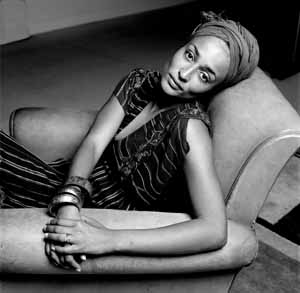
< Zadie Smith >


driving miss zadie

By Wendy Cavenett

It’s a warm autumn morning and the soon-to-be demolished Sebel of Sydney is teeming with departing guests. Renowned as the city’s celebrity stop-off, it’s only natural that Zadie Smith, a literary star and nascent wild child, is holed up here, albeit, as I discover, unwillingly.
There’s no time for sightseeing, no scheduled R&R. In fact, Smith is tied to the momentous hoo-ha that continues to surround her debut novel, White Teeth. Not that she expected it, but when Salman Rushdie left a personal congratulatory message on her answering machine, she must have realised her life was changing. Now released in eight countries, it seems White Teeth has assumed a life far greater than the author could have ever imagined.

If she had a choice right now, she’d probably catch the next plane back to the UK. Instead, she remains seated, eyes downcast, irritated, tired and indifferent. In such a state it would be easy to misjudge her. Her monotone voice often drifts quietly away and it’s only when we stop discussing the book that she shows moments of what I imagine to be her true self; a wickedly funny, sharply intelligent 20-something Brit who detests life’s pretenders and lavishes praise upon controversial US rap artist Eminem.

“I’ve heard all the questions before,” she says. It’s unfortunate I tell her, but we should discuss her book.

“I think I can write so that’s one of the reasons why White Teeth is successful,” she says answering no question in particular. “I’m very serious about what I do and hopefully that translates somehow onto the page. It’s a funny book. People like to read funny things, and when you’re working well I suppose you happen to fall in line with some kind of Zeitgeist which doesn’t happen very often in a writer’s career. It’s a mixed blessing but there it is.”

The daughter of a Jamaican mother and an English father, Smith was born in England in 1975. She grew up in Willesden, read English at King’s College, Cambridge, returned to her neighbourhood and now lives in her own place thanks to a reported $625,000 two-book publishing deal with Penguin.

“I don’t give a fuck about the fact that you can’t get married or you don’t know whether to have children or not,” she says, “I just don’t care about lifestyle journalism crap, but I do like to see people who get up and show a skill, because it is a skill if you do it properly. That’s the kind of writing I’m interested in. People who can show me why they’re writers.

“I recently read Lolita for like the 13th time and thought that was still one of the greatest books of the last century. Nabokov was just a genius. I can’t even take it apart to understand why it’s so good. It’s just a truly great, magnificent book, partly because it makes you empathise with this paedophile basically, and it’s not there to make you feel good.

“It’s quite important to remember that fiction isn’t there to make you feel good about yourself all the time. That’s not actually the purpose of fiction, that’s the purpose of lifestyle journalism for what it’s worth.”

We talk about what she likes: Britney Spears, fashion, Big Brother, pornography, Madonna, Dr Dre, Hollywood films before 1958—American Beauty being the only exception. And then there’s Eminem, her big obsession. The white rap artist who’s been accused of promoting homophobia, rape and murder in his music. He’s also facing criminal charges. “I think he’s a genius,” Smith says. “I think he’s a very rare artist in that he’s Billboard number one, but he’s also totally uncompromising and extremely brilliant. He just believes in narrative absolutely so he’s telling a story and it’s really none of your fucking business what happens in the story, and who gets killed or raped or whatever. He’s incredibly brave and he wants to take art back to something a bit rawer and I think that’s kinda cool.

“I haven’t got any time for really lame backlash crap. It’s so hideous. Even the points I can’t follow him on—like his homophobia; I can’t follow [John] Updike’s homophobia but it doesn’t mean he can’t write, you know? There’s a constant confusion with rap artists and it’s one that Eminem talks about again and again—that they do what they say. The point of being a rap artist is you don’t rob banks because you’ve found something else to do, that’s why you rap. You’ve found something which means that you don’t have to rob banks, or shoot people or rape women. You’ve found some other way of making money and expressing yourself, that’s kind of the point.

“Why people can’t understand that talking in the first person in a rap is exactly the same as talking in the first person in a novel is completely fucking beyond me. I can’t understand it. Apparently, Eminem is writing a book—which I’m very excited about. That’s if he lives to do it, which I very much doubt. But if you look at the past few years, I believe he’s the one artist who has made people think more than any other.”

With the interview over, I watch her leave and hope she is able to sit down and write again soon because there’s nothing worse than creative destruction, especially considering the calibre of Zadie Smith’s talent.

> > >

This interview was published in Australian Style in 2001. Since that time, Smith, now a multi-award winning novelist and Radcliffe Fellow at Harvard University, has had numerous books published including: Piece Of Flesh (2001)—an anthology of erotic stories; The Autograph Man (2002); On Beauty (2005)—winner of the 2006 Orange Prize for Fiction;  and Changing My Mind: Occasional Essays (2009)—a collection of essays on writing. Smith also wrote the introduction to the brilliant The Burned Children of America (2003), a collection of 18 short stories by a new generation of American writers.

> > >